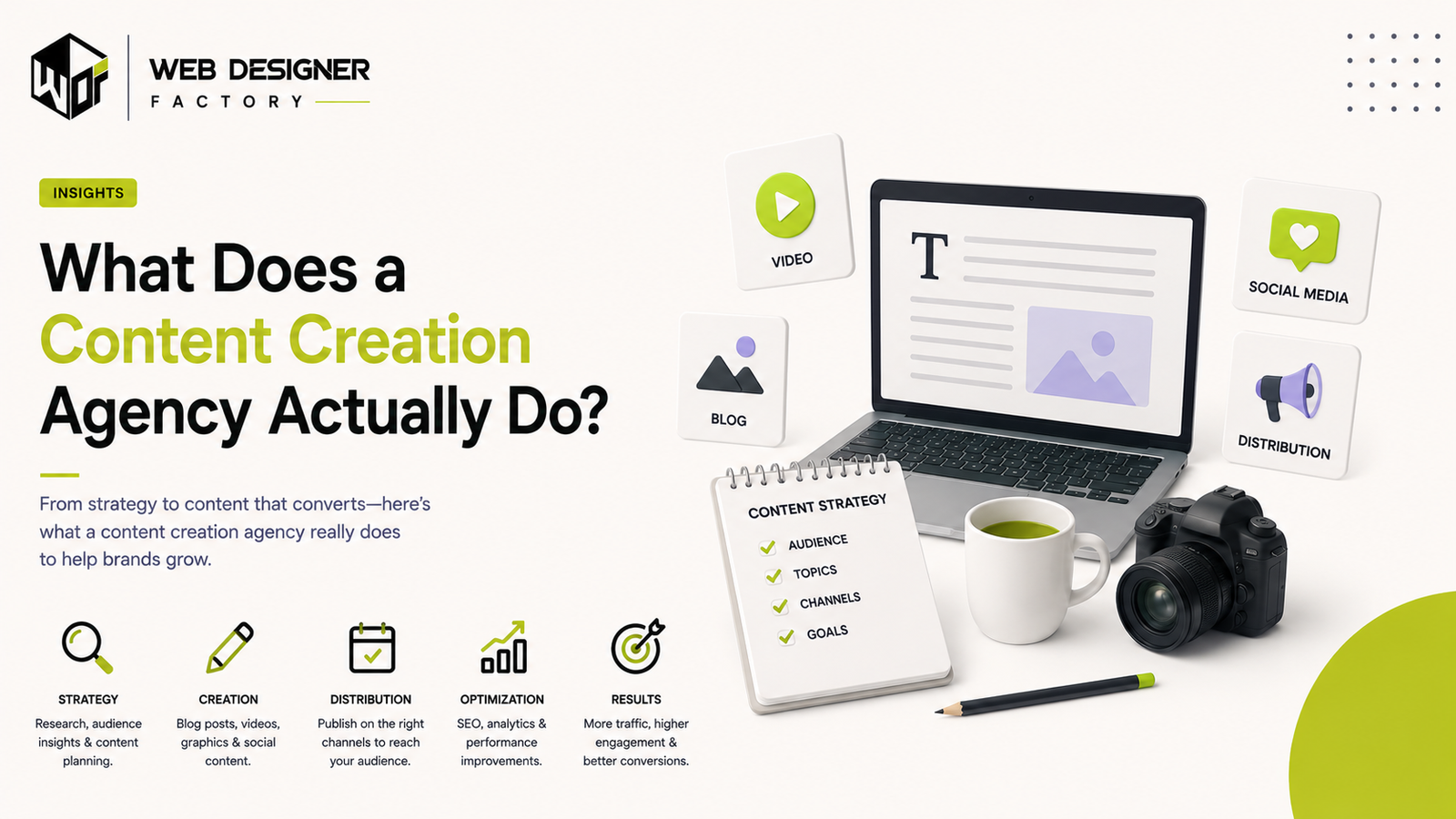
A content creation agency plans, writes, designs, and optimizes the words, images, and video that live on a website and social channels. That complements web design, which shapes the experience, and technical SEO, which helps search engines access and understand the site. The work overlaps, but each needs a clear owner.
What a Content Creation Agency Actually Does
A content creation agency is responsible for the material that fills a website, blog, and social profiles: writing, images, video scripts, and supporting information that makes the subject clear. Services can cover blog posts, service page copy, case studies, email newsletters, and social captions, depending on the agreed scope.
Content Creation vs. Content Marketing vs. SEO Writing
These terms overlap, but each describes a different part of the work. Content creation is production: writing the piece, designing the graphic, or filming the clip. Content marketing connects that work to an audience and business objective. SEO writing uses search research to help a piece answer the questions people are looking for. When you hire an agency, ask how those responsibilities fit together, from choosing a useful topic to publishing and reviewing the result.
What to Look for When Evaluating an Agency
- A documented process built from real keyword and search intent data, not a generic content calendar filled with topics guessed from a keyword tool.
- Clear writing for people using traditional search or AI-assisted research: direct answers, useful examples, and primary sources where the claim needs evidence. Google’s AI-feature guidance keeps the emphasis on helpful, accessible content.
- A strategy tied to actual business goals, leads, sign-ups, sales, rather than a set volume of posts per month with no connection to outcomes.
- Editorial standards that follow Google's people-first content guidance: real experience, expertise, and usefulness, rather than content written primarily to game rankings. See Google’s people-first content guidance.
One mistake worth avoiding is hiring only for volume, a fixed number of posts each month, without deciding what that content should accomplish. Ask how the agency will connect its production work to reader needs and measurable business outcomes.
A useful engagement starts with a content operating model
Define the audience, business objective, canonical page owners, subject-matter experts, evidence sources, review roles and publishing cadence before ordering assets. Without that model, an agency can produce a large volume of polished material that competes with itself or cannot pass factual review.
The brief should describe a reader decision
- The question or job the content must satisfy.
- What the reader already knows and what they need next.
- Required evidence, examples, constraints and excluded claims.
- Canonical keyword and intent ownership, supporting links and conversion boundary.
- Reviewer, freshness class and conditions that require a future update.
Research quality is visible in the final piece
Strong work distinguishes official facts, expert interpretation and verified first-party evidence. It links changing claims to current sources, identifies limitations and removes facts that cannot be supported. A citation list alone does not create expertise if the body remains generic.
Editorial review needs more than grammar
Review intent satisfaction, originality, claim support, cannibalization, answerability, internal links, accessibility and the next decision. Then check voice, rhythm and readability. Editing should remove repetition while protecting the practical detail the reader came for.
Measure by the content’s job
- Discovery content: relevant impressions, qualified clicks, citations and assisted journeys.
- Decision content: comparison engagement, return visits and progression to the correct service or contact path.
- Sales support: use in conversations, reduced repeated questions and opportunity progression.
- Retention or help content: task completion, support deflection and customer feedback.
Traffic is useful context, not a universal definition of success. A narrow article can be valuable if it resolves a costly decision for the right audience.
Questions to ask before hiring a content creation agency
- How do you prevent duplicate intent and protect canonical page ownership?
- Which sources and experts will support factual claims?
- Who reviews strategy, subject accuracy, search quality and final copy?
- How are revisions, rights, source files and platform access handled?
- How will the team measure qualified value and maintain time-sensitive content?
The right partner should make the evidence, workflow and ownership clearer, not merely promise more output.
Content writing is part of our digital marketing services. We can discuss the content you need, the research involved, and the review process before agreeing on the scope.
Sources and methodology
Search guidance refers to Google’s people-first documentation and guidance for AI features. Service definitions, briefing steps, and hiring recommendations are Web Designer Factory practitioner guidance, not survey findings or promises of a specific traffic return.