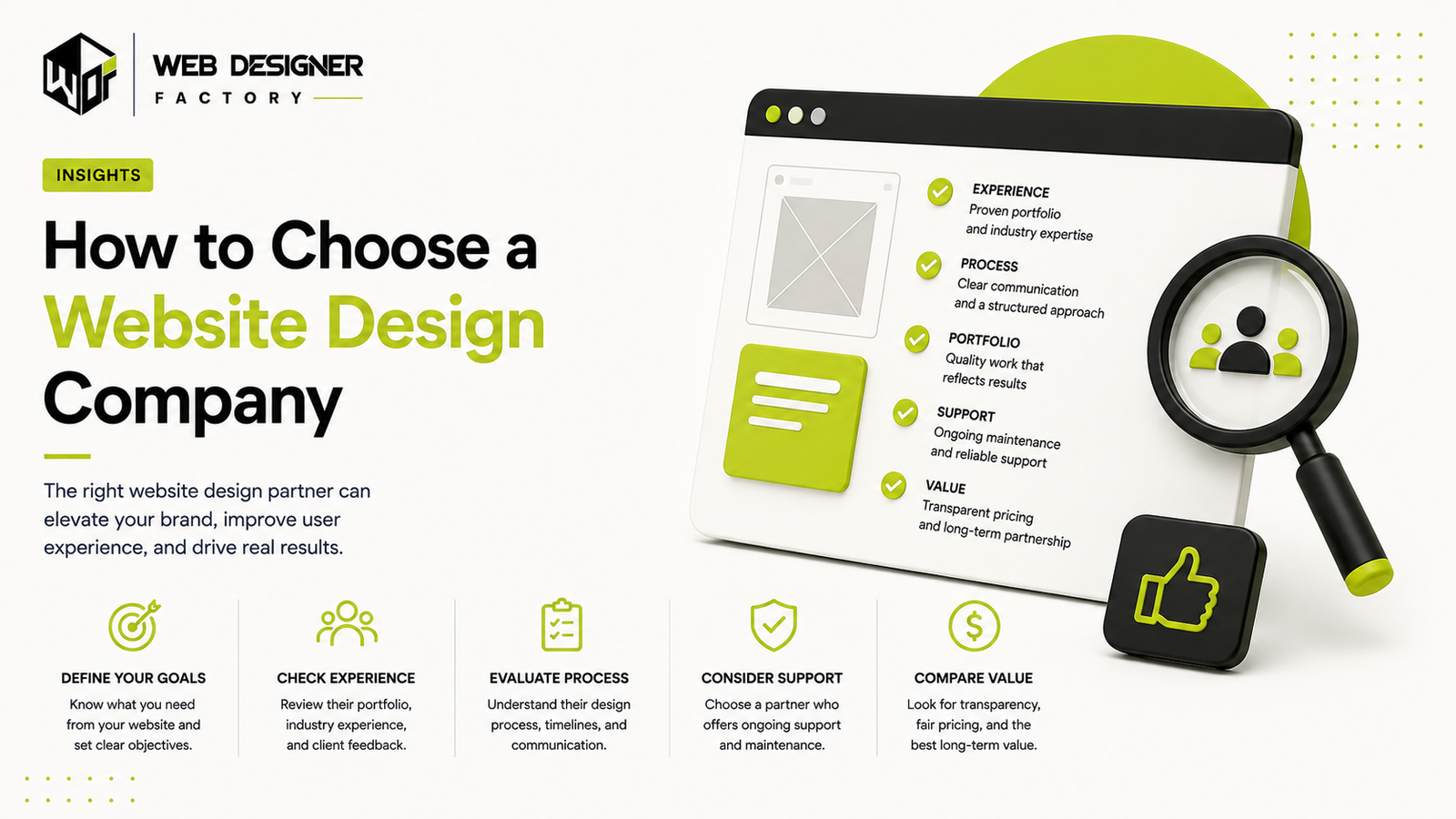
Look for a website design company that can explain how it will support your goals, test the finished site, and handle ongoing ownership. A clear evaluation can help you avoid a poor fit and unexpected rework. Here is what to check before signing.
Start With What the Website Actually Needs to Do
Before comparing companies, write down the job the site has to do: generate quote requests, sell products, support an existing sales team, or replace an outdated site that no longer reflects the business. A company that asks about your business goals before pitching a template is doing this step correctly. One that jumps straight to a price is not.
Review Real Work, Not Just a Portfolio Page
Ask to see two or three live sites the company built for businesses with relevant needs, and review them on a phone. If you find a broken interaction or slow page, ask who currently maintains it and what the team delivered before drawing a conclusion.
Ask How They Approach Technical and SEO Strategy
A website that looks good but cannot be found on Google is not doing its job. Ask directly how the company handles page speed, mobile responsiveness, accessibility, and basic on-page SEO, and whether SEO services are something they offer or something you will need to arrange separately later. Use Google’s SEO starter guide and WCAG 2.2 to frame concrete technical questions.
Check Reviews on a Platform You Do Not Control
Read third-party reviews as well as the company’s own case studies. Look for specific descriptions of communication, delivery, and support, and consider the date and context rather than relying only on a star rating.
Understand the Process Before You Commit
A clear process, discovery, design review, development, testing, launch, protects both sides of the project. Ask how many revision rounds are included, who owns the code and the domain once the project is complete, and what a Statement of Work looks like before any payment is made. A company that cannot describe its own process in plain terms is unlikely to run a predictable project.
Understand Pricing Without Leading With It
Discuss budget alongside requirements. Compare what each quote includes, what creates additional cost, who owns the platform and files, and what support is available. A price difference is a reason to ask questions, not proof that something important is missing.
Assess Communication Before You Need to Rely on It
Use the first conversations to agree on communication expectations: the contact person, review process, response targets, and escalation path. Clear answers help you judge whether the working style fits.
Ask What Happens After Launch
A website is not finished the day it goes live. Ask what post-launch support looks like: who fixes a broken form, who updates a page when your hours change, and whether ongoing maintenance is available if you want it. A company that treats launch as the finish line, rather than the start of an ongoing relationship, is telling you something about what comes next.
The Real Question: Partner or Vendor
Decide whether you need a one-time build, ongoing support, or a longer-term partnership. Use the checks above to compare evidence, responsibilities, and fit rather than choosing only on speed or price.
Sources and methodology
This is Web Designer Factory’s hiring checklist, not a survey of agency performance or complaints. Technical questions refer to Google Search Central and WCAG 2.2. Confirm project-specific scope, ownership, and support in the written agreement.