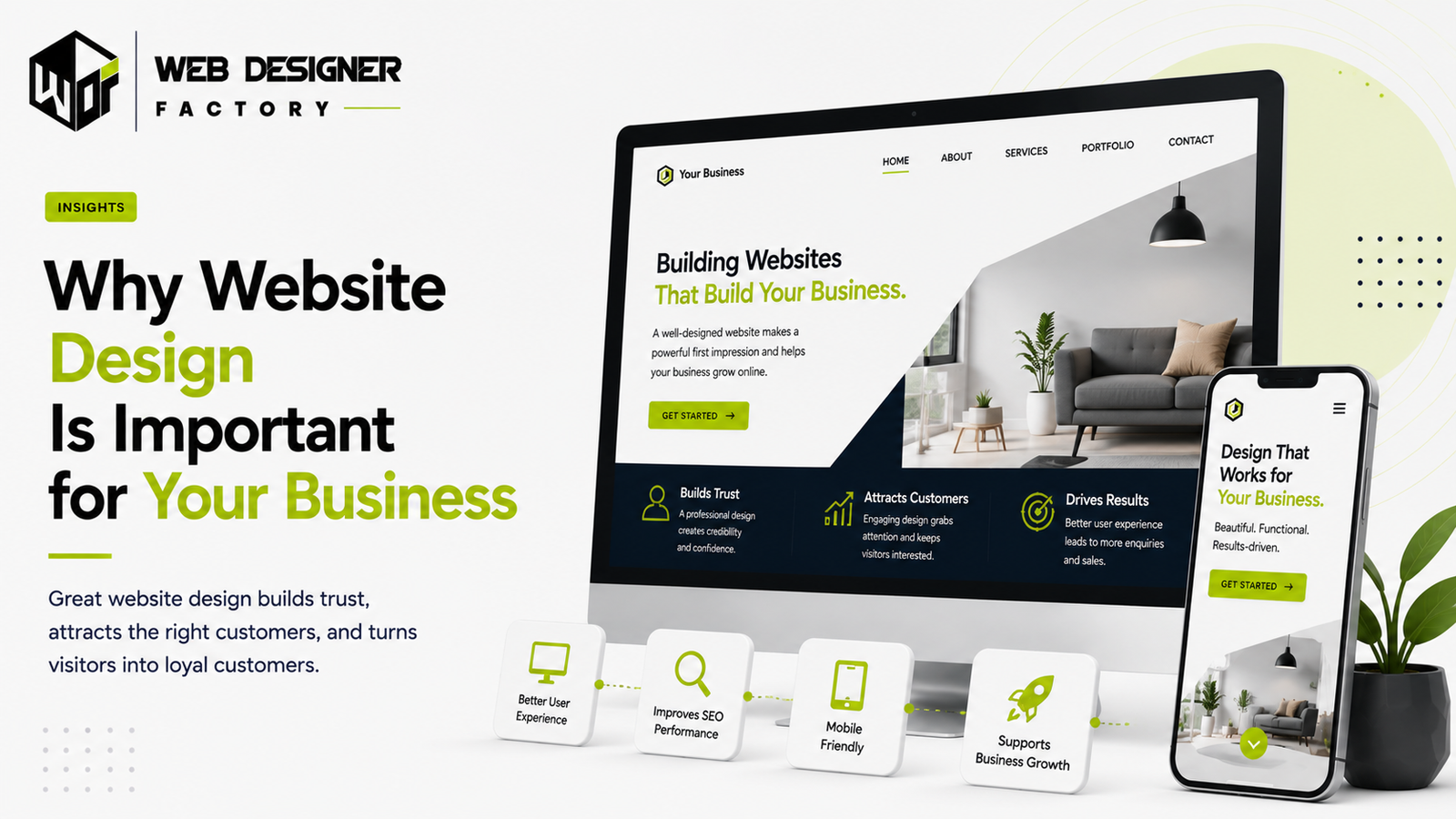
Your website is often the first interaction a potential customer has with your business. It is more than a digital brochure. It works as a 24/7 sales tool that builds trust, communicates value, and drives conversions, and it plays a real part in making a strong first impression and supporting long-term growth.
1. First Impressions Happen Fast
The opening view gives visitors clues about what the business offers and where to go next. Make that information clear, readable, and consistent with the rest of the site, then use task testing and feedback to see whether people understand it.
2. Design Affects SEO Performance
Design and implementation affect how people and search engines access the content. SEO services can address those foundations; Google’s page-experience guidance explains the search role of performance without making visual design a guaranteed ranking advantage.
- A responsive design makes a site work well on every device.
- Correct use of HTML structure and schema markup helps a search engine understand the content. See Google’s structured-data guidance.
- Use Core Web Vitals to measure loading, responsiveness, and stability. Do not treat bounce rate as proof that a speed change caused a ranking change.
Good SEO practice has to be built into the design itself, not added afterward.
3. User Experience Drives Conversion
Good design is about function as much as appearance. Review whether people can find information, read it comfortably, and complete their intended task. Useful starting points include:
- Clear, intuitive navigation
- A mobile-first, responsive layout
- Calls to action that are specific about what happens next
- A streamlined checkout or contact process
Define the desired lead or sales action and measure qualified outcomes after changes. A design improvement should solve an observed problem, not rely on an assumed conversion lift.
4. Consistency Builds the Brand
A website should reflect a brand's voice, values, and identity. Consistency across every page builds recognition and trust, through:
- Fonts and colors aligned with the brand's actual identity
- A consistent tone of voice and message
- Original imagery and design elements rather than generic template art
A shared visual system can keep either a template-based or custom site consistent. Choose the approach that supports the content and customer journey without awkward workarounds.
5. Mobile Optimization Is Not Optional
Check your audience’s device mix and make the mobile journey complete. Google primarily uses mobile content for indexing, so important information should not exist only on desktop. A useful mobile review asks whether the site:
- Loads quickly on a phone
- Uses tap-friendly buttons and spacing
- Keeps navigation and readability consistent with the desktop experience
6. Design Builds Trust
Give visitors clear ways to evaluate the business. Accurate contact information, authorized proof, usable pages, and secure connections all deserve attention. Review these elements in context:
- HTTPS security web.dev explains what HTTPS protects.
- A clean, uncluttered layout
- Easy-to-find contact information
- Genuine testimonials or reviews
7. Design Supports Scalability
A website should be able to grow with the business behind it. A properly built site, on a flexible content platform, supports future changes such as adding a store, integrating new software, or expanding SEO, without a rebuild every time the business changes.
8. Good Design Is a Competitive Advantage
Use the website to explain the offer and show relevant evidence clearly. Competitor research can reveal questions customers need answered, but a visual change alone does not establish a competitive or sales advantage.
Website Design Is a System, Not a One-Time Task
A website is a foundational business asset. From first impressions through long-term SEO and conversion, good design is not optional. It shapes how people perceive a brand, how they engage with its content, and whether they decide to do business with it. A site that was never built with clear structure, or one that is struggling on mobile, is worth auditing before a rebuild rather than after one.
If you are ready to invest in a website built around your business rather than a template, our team can walk through what that would look like for you.
Sources and methodology
Search and technical statements use Google’s page-experience guidance, mobile-first indexing documentation, structured-data guidance, and web.dev. Design priorities are Web Designer Factory practitioner guidance; no universal first-impression time, mobile traffic share, or conversion uplift is claimed.